
The recent ItalyX certification awarded to Armo is not only a prestigious acknowledgment, but also a significant step forward in enhancing the value of our Made in Italy identity.

Being awarded this certification means becoming part of a virtuous network of Italian manufacturing companies that share a common vision: excellence, quality, and transparency in production.

What is the ItalyX certification and why it matters

Promoted by Il Sole 24 ORE in collaboration with Confindustria, the ItalyX certification is an authoritative and innovative tool designed to protect and promote genuine Italian manufacturing companies.

It is not merely a label—it is the result of a documented and independent verification process, conducted by a third-party body.

In this context, Armo has become the first company in its sectors to obtain ItalyX certification, reaffirming its position as a benchmark in the Italian manufacturing excellence landscape.

This recognition highlights our daily commitment to:

  • Attention to detail at every stage of production
  • Selecting high-quality materials from certified suppliers
  • Adopting transparent production processes aligned with top industrial standards
  • Honoring Italian craftsmanship traditions while embracing technological innovation
  • Becoming an ambassador of true Made in Italy

Being ItalyX-certified also means taking on the responsibility of acting as ambassadors of authentic Made in Italy around the world.

In an era where product origin is often unclear, this type of certification holds strategic value for customers, partners, and the global market.

For this reason, Armo was invited to take part in the conference “From Value to Protection: The Future of Made in Italy between Certifications and Global Challenges”, organized by Il Sole 24 ORE and held at the Italian Senate on the occasion of the National Made in Italy Day.

A high-level event that brought together key institutional and business representatives to discuss the future of Italian excellence.

This certification is a starting point—not an end.

We will continue to strengthen our identity as a certified Made in Italy manufacturer, offering increasingly innovative, sustainable, and excellence-driven solutions in line with the values of Italian quality.

For more information about the certification, visit the official ItalyX website:

https://italy-x.ilsole24ore.com


When it comes to industrial equipment, the term “machine” is often used generically, sometimes including items that are, technically speaking, “partly completed machinery.” But what exactly distinguishes one from the other?

What Is a “Machine” According to Directive 2006/42/EC?

Directive 2006/42/EC defines a “machine” as:

  • “An assembly, fitted with or intended to be fitted with a drive system other than directly applied human or animal effort, consisting of linked parts or components, at least one of which moves, joined together for a specific application.”
  • “An assembly referred to in the first indent, missing only the components to connect it on site or to sources of energy and motion.”
  • “An assembly referred to in the first and second indents, ready to be installed and capable of functioning only once mounted on a means of transport or installed in a building or a structure.”
  • “Assemblies of machines referred to in the previous indents, or of partly completed machinery as defined in point (g), which are arranged and controlled so that they function as a whole.”
  • “An assembly of linked parts or components, at least one of which moves and which are joined together for lifting loads, with only directly applied human effort as the power source.”

In summary, a “machine” is a set of components, at least one of which is movable, capable of performing a specific function autonomously (e.g. lifting loads or moving materials), without the direct use of human or animal force.

What Is “Partly Completed Machinery”?

According to Directive 2006/42/EC, “partly completed machinery” refers to:

“Assemblies which are almost machinery but which cannot in themselves perform a specific application.”

A typical example would be a drive system.

Partly completed machinery is designed solely to be incorporated into or assembled with other machines or equipment to form a system that complies with the directive.

In short, partly completed machinery cannot operate on its own—it needs to be integrated into a larger assembly to fulfill a useful function. Examples include an electric motor or an anthropomorphic robot, which only serve a clear purpose once built into a complete machine.

Why Does the Distinction Matter?

While both machines and partly completed machinery fall under Directive 2006/42/EC, the manufacturer’s obligations differ:

Risk assessment is mandatory for both and is used to identify hazards and necessary safety measures.

The certification process, however, varies:

For Machines:

Full CE marking procedure is required, ending with the application of the CE label.

For Partly Completed Machinery:

While Essential Health and Safety Requirements (EHSRs) must still be met, CE marking is not applied. Instead, specific technical documentation is required.

A Manufacturer of Partly Completed Machinery Must Provide Three Key Documents:

1️⃣ Relevant Technical Documentation

Similar to the technical file required for machines, this must:

Cover design, manufacturing, and operation;

Demonstrate compliance with applicable EHSRs;

Be drafted in one or more official EU languages;

Be available for at least 10 years from the date of manufacture (or of the last unit produced);

Not necessarily be kept within the EU, but must be made available upon request by authorities;

Include test reports, verifications, and analyses proving the safety of design and construction.

Legal reference: Annex VII of Directive 2006/42/EC.

Note: Failure to provide this documentation may raise doubts about the conformity of the partly completed machinery.

2️⃣ Assembly Instructions

Unlike machines, partly completed machinery must include an assembly manual that:

Describes how to correctly incorporate the item into the final machine;

Includes all safety-related warnings;

Is written in an official EU language accepted by the final machine’s manufacturer.

Legal reference: Annex VI of Directive 2006/42/EC.

3️⃣ Declaration of Incorporation

This document is the counterpart to the machine’s EC Declaration of Conformity and must:

Describe and identify the partly completed machinery;

Be issued in the official language of the EU country where it will be marketed;

List the EHSRs that are applied and fulfilled;

Declare that the partly completed machinery must not be put into service until it has been incorporated into a fully compliant machine;

Be retained in its original form for at least 10 years.

Legal reference: Annex II of Directive 2006/42/EC.

Note: The manufacturer (or their authorized representative) must provide this documentation upon request from competent authorities.

Conclusion

Although partly completed machinery cannot function on its own, Directive 2006/42/EC outlines a specific certification process to ensure compliance with relevant Essential Health and Safety Requirements.

Both the Declaration of Incorporation and the Assembly Instructions must accompany the partly completed machinery until it is fully integrated, and must be included in the technical file of the complete machine.

Dal progetto al prodotto

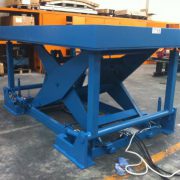
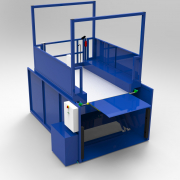
A great news is ready to change the lorry loading/unloading lifting tables market: the OMEGA table.
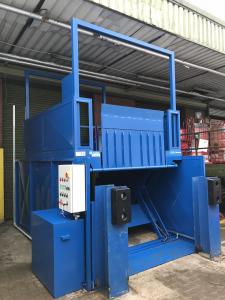
Realized following the usual system of scissor, always safe and confident, the OMEGA table permits to load/unload truck by using a lifting table, without any pit requirement. On board controls  are comfortable and the operator can quicken the pace, always in total safety. Change your old mobile yard ramp: install a modern and safe product as our OMEGA lifting table without any pit.

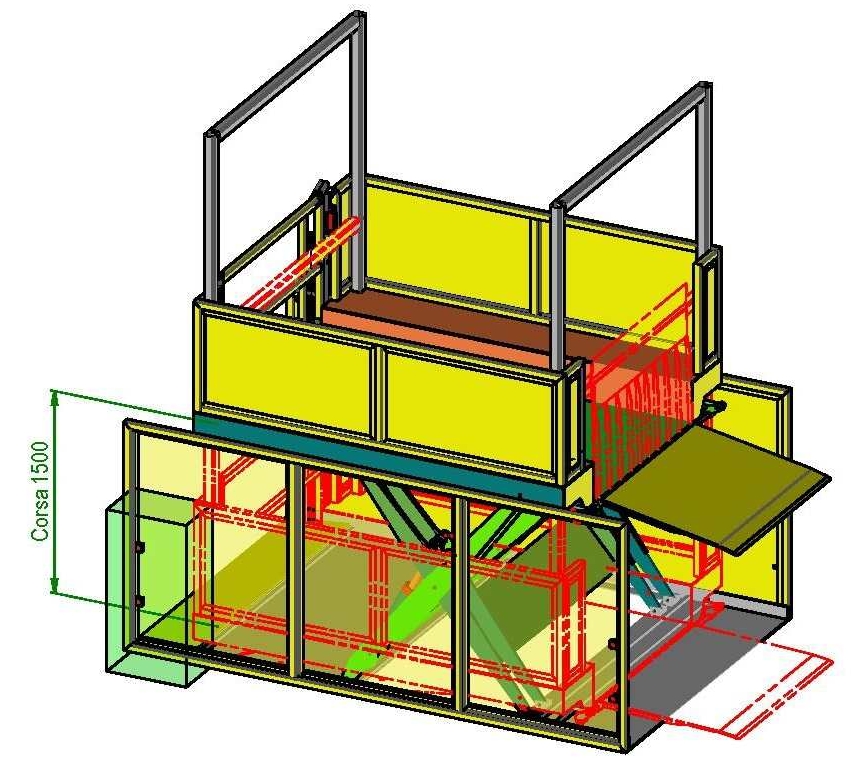
Reduced closed height (60 mm) permits to install the table directly on the ground, without any pit realization, to load without any difficulty pallets up to 2500 kg. on the upper frame thanks to a useful inviting chute.

The rear gate, supplied with a safe electrolock and lateral protections make the work easy and safe. Frontally, a hydraulic tail of 1100 mm depth helps against the fall when it is in its rest position and permits as well to reach all trucks in order to transfer goods. Frontal photocells protect from crushing risks during the loading phases.
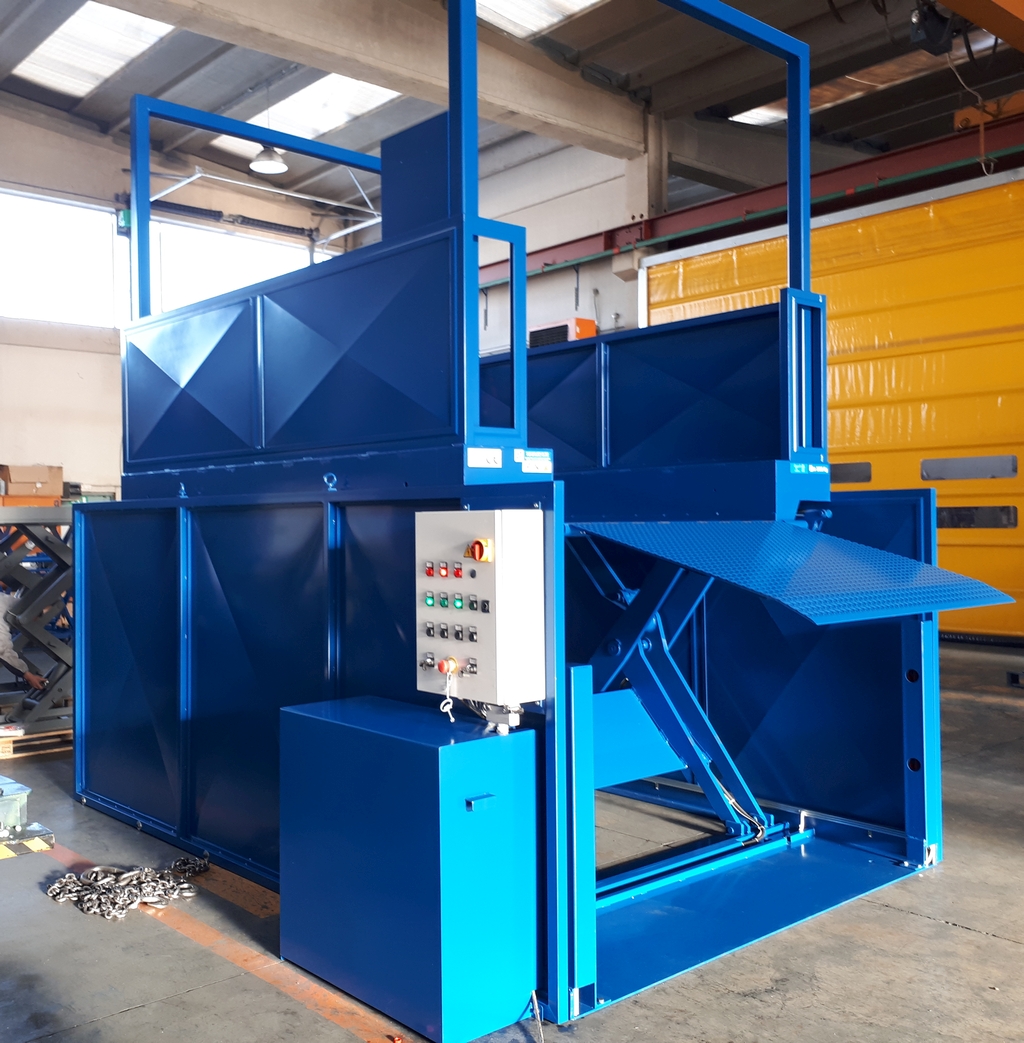
Rubber buffers (when required), outside treatments, special dimensions: those are all accessorizes and options, which by request can personalize your OMEGA scissor table without any pit, for loading/unloading trucks.


We remind that all our tables (so the OMEGA as well) are checked in our warehouse before the departure; they are ready to be easily installed unmistakably. Ask for a free quotation and you will be astonished of how easy can be solving one of the most common problems: to load/unload trucks or vans when there is no way to make a pit and without employing the nowadays old, unattractive and cumbersome mobile ramps.
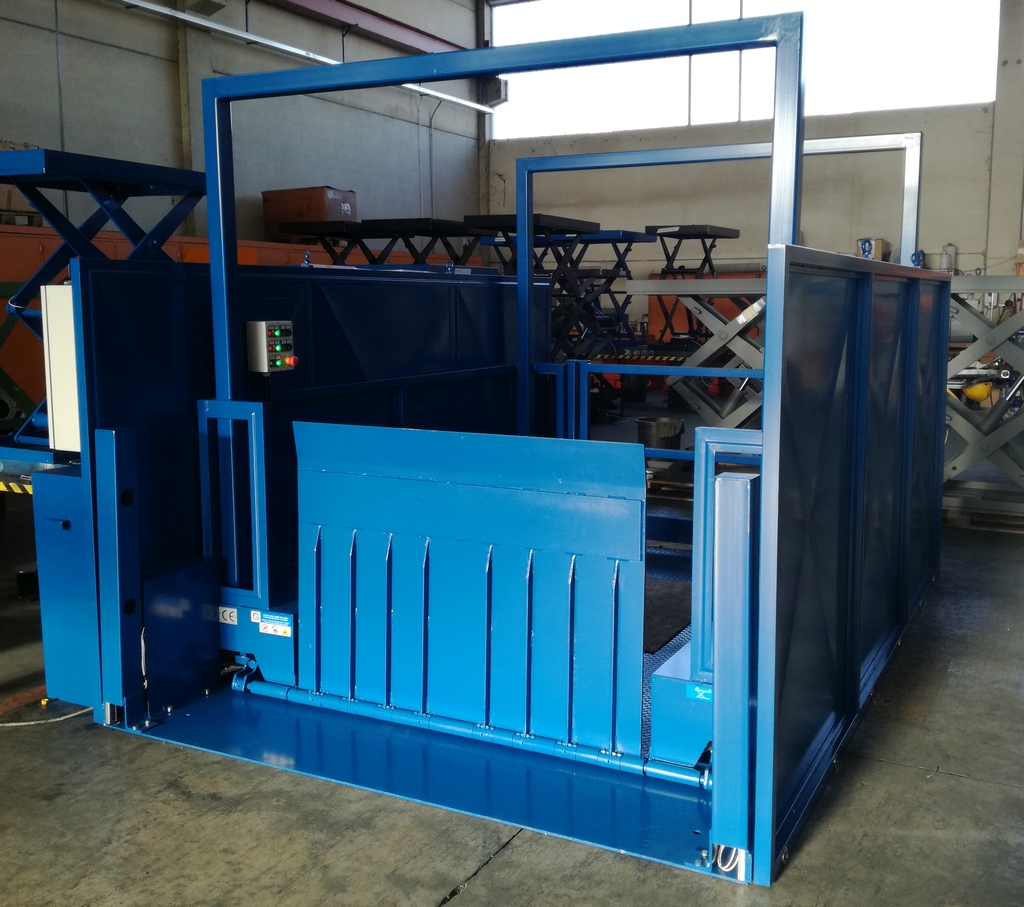


Tavola elevatrice in posizione chiusa senza fossa
A new project including both swing lip and telescopic lip dock levellers, hot dip galvanized, has been delivered this month.
Read more